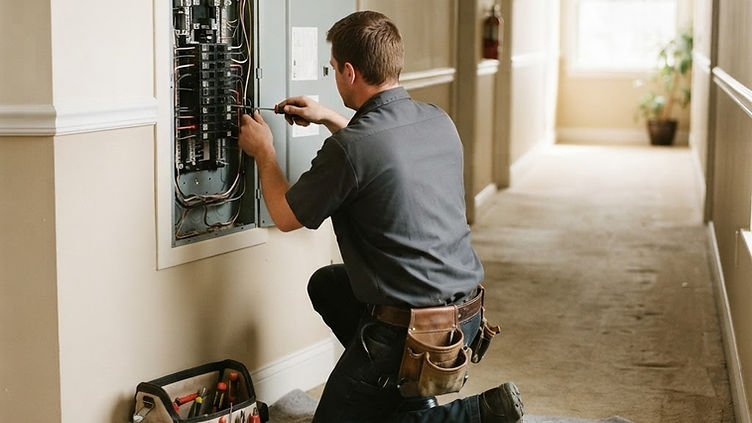
Every maintenance backlog looks like a capacity problem from the outside. Not enough technicians, not enough hours, too many units. Sometimes that is true. More often, when you open the actual list, the work orders have been finished for days and nobody told the resident.
That is not a staffing issue. It is a loop that was never closed.
What is actually in the backlog
Sort any open work order list into three buckets and the shape becomes clear. Work that has not started. Work that is waiting on a part, a vendor, or access to the unit. And work that is done but still open, usually because the technician closed it on their end and the resident never heard anything.
The third bucket is the one that generates the angry calls. From the resident's side, nothing has happened. They submitted a ticket, the sink still drips in their memory, and the only evidence of progress is that nobody has knocked on the door. From the property's side, the job was completed nine days ago.
Residents measure silence
A resident waiting on a repair is not tracking your process. They are tracking information. No news reads as bad news, and after a few days it reads as being ignored.
Two sentences fix most of this. "We have the part ordered, it's arriving Thursday, and I'll text you when we have a window" converts a stalled ticket into a managed expectation. It does not make the repair faster. It does stop the resident from calling three times and leaving a review about responsiveness.
The teams that do this well have a simple rule: no work order sits for more than a set number of days without a resident-facing update, even if the update is that nothing has changed.
Triage is a written policy, not a feeling
Most properties have a triage instinct and no triage document. The result is inconsistency between shifts: what one technician treats as an emergency, another schedules for Tuesday, and the resident learns to escalate everything because escalation is the only reliable path.
Write it down in four tiers and define each with examples. No water, no heat, no power, no working lock, active leak, sewage: immediate. Refrigerator failure or a non-functioning toilet with one bathroom in the unit: same day. Appliance problems, slow drains, partial outages: next business day. Cosmetic and preventive: scheduled batch.
Then post it where residents can see it. A resident who understands that a dripping faucet is a tier-three request is a resident who will not call at 11pm — and the ones who do call will have a genuine tier-one problem.
Cycle time beats ticket count
Ticket count is a seductive metric because it is easy. It also rewards closing things rather than fixing them, and it says nothing about how long a resident waited.
Track the median time from submission to completion, and separately the median time to first contact. The second number is usually the one that matters most to satisfaction and it is almost never reported. A property that responds within an hour and completes in four days will beat a property that responds in two days and completes in two, every time.
Parts, vendors and the waiting bucket
Anything waiting on a part needs a date and an owner. A running list with expected arrival, who is chasing it, and a fallback option if it slips. Special-order parts are where backlogs quietly rot, because the ticket looks active while nothing is happening to it.
Vendor-dependent work needs the same discipline. If the vendor's scheduling window is three weeks, say three weeks at the moment the ticket is opened, not on day ten when the resident asks.
The close-out habit
The single highest-return change most properties can make is a close-out ritual: the job is not closed until the resident has been told it is closed, and until someone has confirmed the work actually fixed the problem. A two-minute call or a text, every time, from the same team that did the work.
It sounds administrative. It is the difference between a backlog that reflects real workload and one that reflects how well the office communicates.