Open any apartment listing built after 2015 and you will find the same three words within the first paragraph. Luxury. Resort-style. Premium finishes. The language has inflated so completely that it no longer distinguishes anything, and residents have learned to read right past it.
What they read instead is the price, the floor plan, the commute and the photos — and then, decisively, the reviews.
Language inflation has a cost
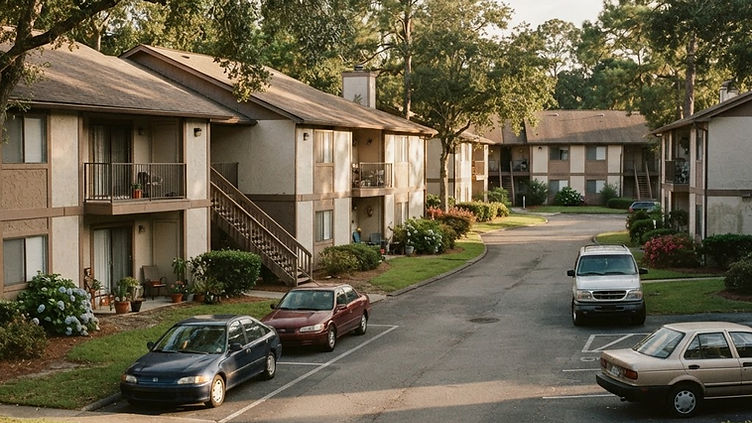
When every community is luxury, the word stops doing work in a listing and starts doing work against you. A resident who arrives expecting a resort and finds a clean, quiet, well-maintained 2004 garden-style building feels cheated by the gap, even though what they got is perfectly good housing.
That disappointment is not really about quality. It is about calibration. Set expectations too high and ordinary competence reads as failure. Set them accurately and ordinary competence reads as exactly what was promised.
What actually communicates quality
Residents are remarkably good at spotting the things marketing departments rarely photograph: hallways that smell like nothing in particular, exterior doors that close without slamming, a parking lot with working lights, a leasing office that answers the phone before the fourth ring, quiet at 10pm on a Tuesday.
Those signals are unglamorous and they are extremely persuasive in person. They are also the hardest things to fake, which is precisely why they work. A resident walking a unit for the first time is not evaluating the granite. They are sniffing the hallway, looking at the neighbors' balconies, and listening for the highway.
If a community is genuinely exceptional, specifics beat adjectives. "Renovated kitchens with full-height tile backsplash, new cabinet fronts and under-cabinet lighting" tells a reader something. "Luxury finishes" tells them nothing and quietly invites distrust.
The reviews are the actual marketing copy
Most prospective residents read three or four recent reviews before they read the listing. They are not looking for five stars. They are looking for a pattern: does maintenance show up, does the office respond, is the pool open in July.
Which means the most effective marketing investment a community can make is not a new photo shoot. It is a response system for negative reviews written by someone with the authority to fix what was described, and a follow-through habit that survives past the reply.
Positioning honestly is a strategy
Boutique buildings do this well. They do not claim to be resorts. They say what they are — small, quiet, older, walkable, renovated, close to the train — and they attract residents who want exactly that. The result is fewer tours that go nowhere and better retention among the people who sign.
A community that knows what it is not can stop competing on a dimension it will lose. The 1990s property will never win on a rooftop pool. It can win on price, space, storage, parking, responsive maintenance and a leasing team that remembers names.
None of that requires a new website. It requires the people writing the listing to sit in the leasing office for a week and notice what residents actually praise, what they complain about, and what they ask before they sign. That is the research that produces language worth reading.
Adjectives are cheap. Anyone can add luxury to a headline. The communities that stand out are the ones whose copy could only describe them.